For decades, a white ceiling has been considered a natural choice, as it is neutral, safe and subtle. But why limit the highest surface in a room to boring whiteness? The days when a white ceiling was synonymous with cleanliness and a “proper” look are over. Today, it is increasingly being replaced with colours that add warmth, character and depth to a room.
White is not always the best choice
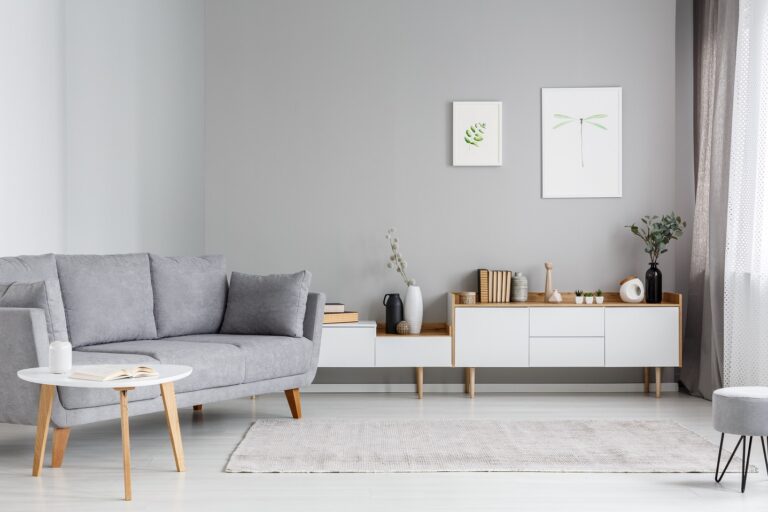
Although white colour optically raises the ceiling and gives a feeling of airiness, it often looks cold, sterile and unfinished. It quickly shows stains, cracks and yellow marks (e.g. due to humidity), which can make the room even more unattractive. In reality, a white ceiling is often a waste of potential and not a well-considered decision.
Why a coloured ceiling?
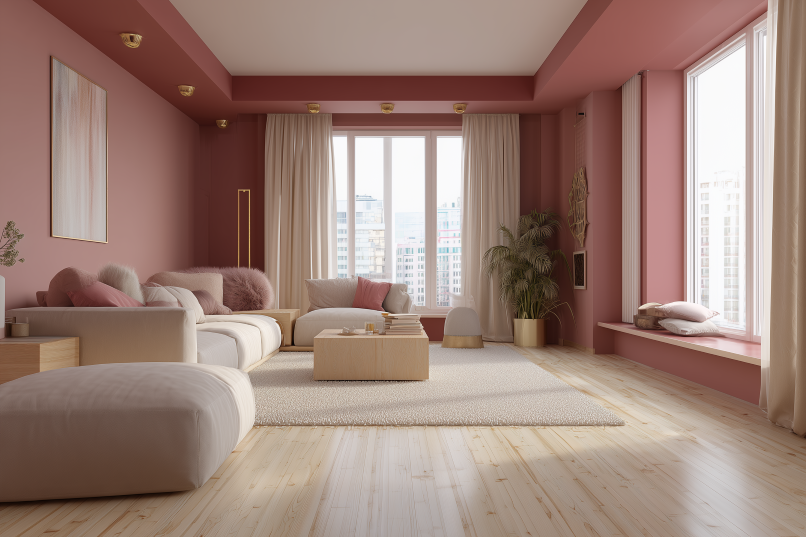
A coloured ceiling acts as part of the overall design of a space. It is not just a fifth wall, but an important design element. With the right colour, we can visually change a space:
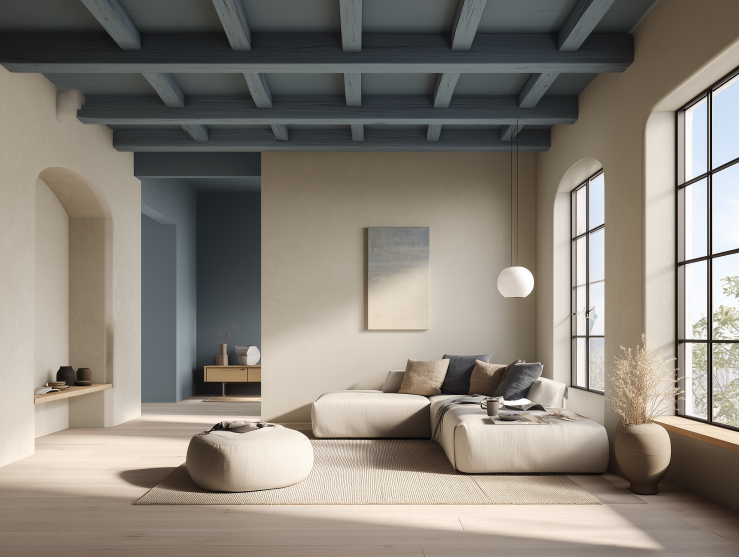
- A dark ceiling in high spaces creates a sense of intimacy and comfort, lowers the height and adds luxury. It goes well with light walls if you want to create a strong contrast.
- A light, pastel ceiling is a friendlier alternative to white. It maintains the brightness, but has a softer effect and creates a gentler atmosphere.
A ceiling in the same colour as the walls creates a “box effect” – a holistic, calming environment that is especially popular in minimalist, Japanese or Scandinavian styles. It is ideal for bedrooms, offices or reading nooks.
The ceiling as a design tool
Interior designers are increasingly turning to coloured ceilings. Not only for aesthetics, but also for psychological effects. The colour of the ceiling affects the feeling of spaciousness, warmth and coziness.
Not every ceiling is white, and rightly so. It is time to finally replace the white ceiling with a story that tells about the space, its character and about ourselves.